Chicago is one of the easiest big American cities to explore without a car. The Chicago Transit Authority (CTA) runs eight rapid transit lines, known simply as the L, and more than a hundred bus routes that reach almost every neighbourhood. Whether you are visiting for a weekend or moving to the city, learning the system saves money, avoids parking headaches and cuts your carbon footprint.
Understanding the L
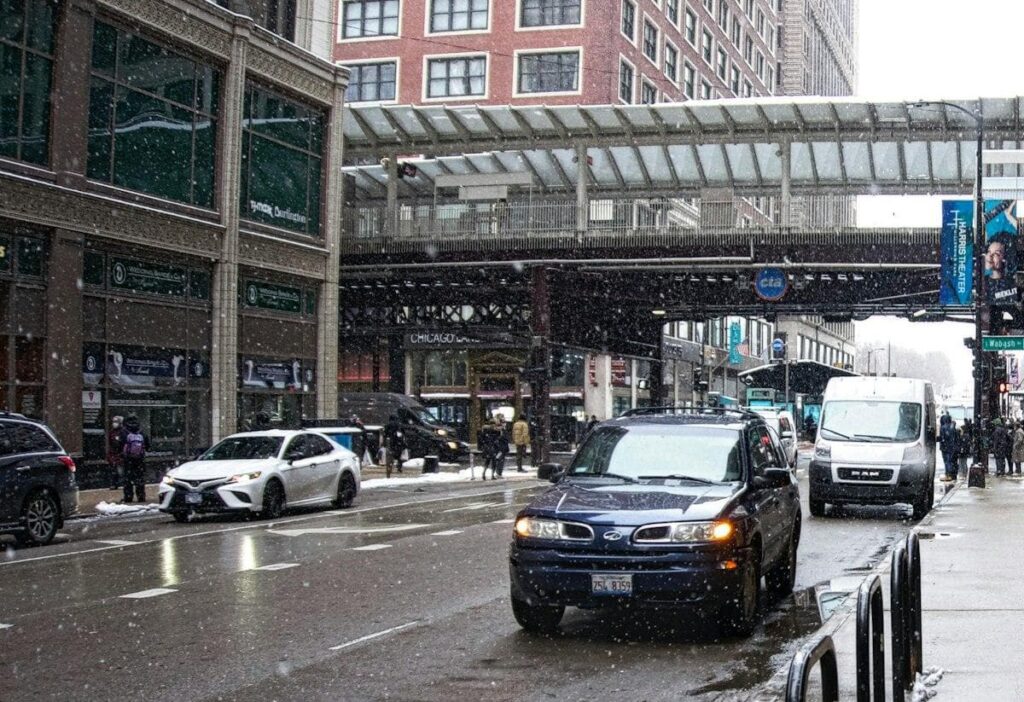
The L gets its name from the elevated tracks that loop around downtown, although some sections run underground or at street level. Lines are named by colour, and most of them pass through the Loop, the central business district.
| Line | Main route | Useful for |
| Red | Howard (north) to 95th/Dan Ryan (south) | Wrigley Field, Magnificent Mile, 24-hour service |
| Blue | O’Hare Airport to Forest Park | O’Hare, Wicker Park, 24-hour service |
| Orange | Midway Airport to the Loop | Midway Airport |
| Brown | Kimball to the Loop | Lincoln Square, Old Town |
| Green | Harlem/Lake to Ashland/63rd and Cottage Grove | West Loop, Garfield Park Conservatory |
| Pink | 54th/Cermak to the Loop | Pilsen, Little Village |
| Purple | Linden (Wilmette) to Howard, express to Loop at rush hour | Evanston, Northwestern University |
| Yellow | Dempster-Skokie to Howard | Skokie |
Riding the Bus
Buses fill the gaps between L lines and are often the fastest way to travel east to west. Key routes include the 146 Inner Drive/Michigan Express along the lakefront, the 22 Clark and the 9 Ashland. Real-time arrival information is available through the Ventra app, Transit, Google Maps and digital displays at many stops.
Fares and the Ventra System
All CTA fares are paid through Ventra. You can tap a Ventra card, use the Ventra app, or simply tap a contactless bank card or phone wallet at the turnstile or on the bus. Fares are capped through passes, which are often the best value for visitors.
- Single ride: pay as you go with a contactless card or Ventra.
- 1-day, 3-day and 7-day passes: unlimited rides on L trains and buses.
- Transfers: up to two additional rides within two hours for a small fee when using Ventra.
- O’Hare: trips starting at the O’Hare station carry a higher fare unless you use a pass.
Check transitchicago.com for current prices before you travel, as fares are reviewed periodically.
Getting To and From the Airports
The Blue Line runs directly from O’Hare to downtown in about 45 minutes, around the clock. From Midway, the Orange Line reaches the Loop in roughly 25 minutes. Both options are usually faster than a taxi at rush hour and cost a fraction of the price.
Using Downtime on Your Commute
Chicagoans spend a lot of time on trains, and the commute has become personal time. Most underground stations now have mobile coverage, so riders read, listen to podcasts, catch up on Cubs and Bears news or play mobile games. Visitors from Britain often check sports scores and favourite apps from home, from news sites to an online casino UK players already know, though it is worth remembering that online gambling rules differ between countries and US states, so local laws always apply. Whatever you do, keep an eye on your stop and your belongings.
Safety and Etiquette Tips
- Let passengers exit before you board, and move to the centre of the car.
- Keep phones and bags close, especially near the doors.
- At night, ride in the first car near the operator.
- Offer priority seats to older riders and people with disabilities.
- Use headphones for music and videos.
Accessibility
All CTA buses are accessible, and most L stations have elevators. The CTA website lists stations with current elevator outages, which is worth checking before setting off with luggage, a stroller or a wheelchair.
Final Thoughts
Once you understand the colour-coded L and a handful of bus routes, Chicago opens up. You can go from a museum on the lakefront to tacos in Pilsen and a game at Wrigley Field in a single afternoon, all without touching a steering wheel. Download a transit app, tap your card and enjoy the ride.